CNC Workholding & Fixture Design: The Key to Consistent CNC Parts
CNC Workholding & Fixture Design: The Key to Consistent CNC Parts
Learn how workholding and custom fixtures affect machining accuracy, repeatability, and lead time. Understand why proper clamping is critical for quality.
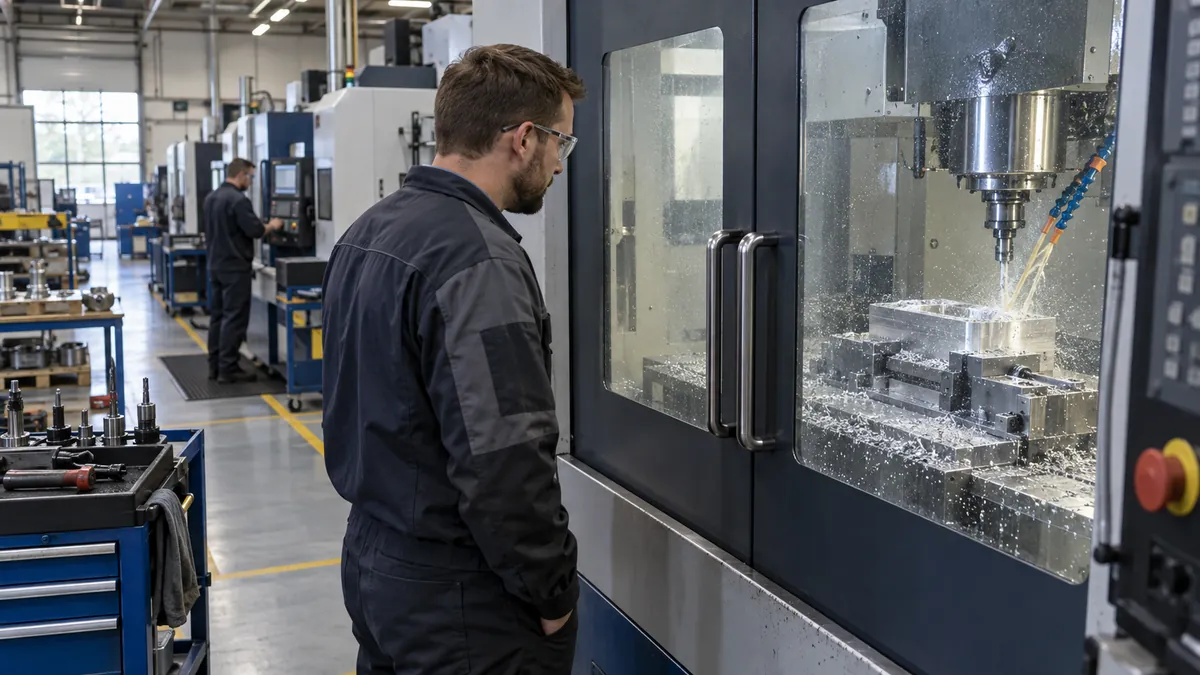
Discuss Your Fixture NeedsIn precision CNC machining, the cutting tool is only half the equation. How the workpiece is held—known as cnc workholding—is equally important. A poorly clamped part can shift, vibrate, or deflect during cutting, leading to dimensional errors, poor surface finish, and even tool breakage.
At Opicreate, cnc fixture design is treated as a core engineering task, not an afterthought. This guide explains common workholding methods, why custom fixtures matter, and how proper clamping improves your parts.
What Is CNC Workholding?
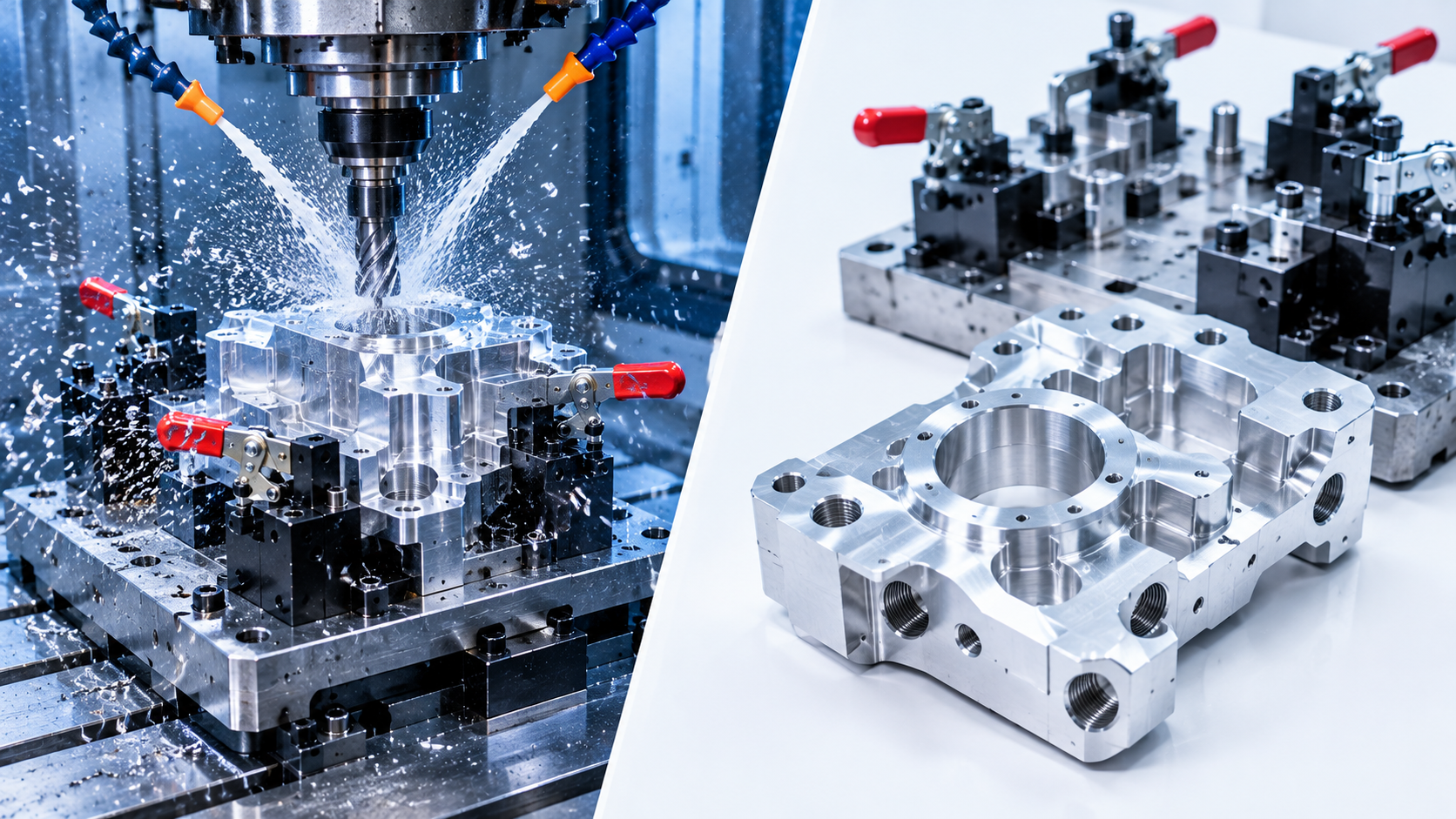
Workholding refers to the methods and devices used to secure a workpiece to the CNC machine table or spindle during machining. The goal is simple: keep the part completely stationary and rigid while cutting forces are applied.
Proper workholding achieves four things:
- Positioning – Locates the part accurately relative to the machine axes
- Clamping – Holds the part firmly without distorting it
- Support – Prevents deflection and vibration during cutting
- Repeatability – Ensures each part in a batch is machined identically
Without proper workholding, even the most precise CNC machine cannot produce accurate parts.
Common Workholding Methods
Different part geometries and production volumes require different workholding solutions. Here are the most common methods we use:
Vises
- Standard for rectangular and block-shaped parts
- Quick setup, good for low to medium volume
- Precision vises hold parallelism within 0.01mm
Clamps & Straps
- Used for larger or irregularly shaped workpieces
- Flexible positioning on the machine table
- Requires careful placement to avoid tool interference
Collets & Chucks
- For round parts on lathes and mill-turn centers
- Excellent concentricity and grip
- Fast loading for high-volume production
Custom Fixtures
- Designed for specific part geometries
- Ideal for complex parts and high volume
- Maximizes repeatability and reduces setup time
Why CNC Fixture Design Matters
A well-designed fixture is an investment that pays off across the entire production run. Here is what proper fixture design delivers:
- Reduces setup time – Parts can be loaded quickly and consistently
- Improves repeatability – Each part is positioned identically, batch after batch
- Prevents vibration – Leads to better surface finish and longer tool life
- Enables complex machining – Multi-sided access in a single setup
- Protects the part – Avoids clamping marks and deformation on finished surfaces
Custom Fixture Design at Opicreate
For high-volume or complex parts, our engineers design and manufacture custom fixtures tailored to your part geometry. The process includes:
- Part analysis – Review geometry, tolerances, and machining requirements
- Fixture concept – Design locating points, clamping strategy, and support structure
- 3D modeling – Create fixture model and simulate tool access
- Manufacturing – Machine the fixture from aluminum or steel
- Validation – Test fixture with first article and adjust as needed
We can also design modular fixtures that accommodate multiple part sizes, reducing tooling cost for product families.
What You Should Know Before Ordering
If your part requires very tight tolerances, has thin walls, or includes delicate features, let us know upfront. We will recommend the best workholding strategy and may suggest design tweaks to improve machinability.
Key factors we consider:
- Part rigidity – Thin walls may need special support or lower cutting forces
- Clamping surfaces – Designated areas for clamping without damaging critical features
- Access for tools – Ensuring the fixture does not block toolpaths
- Material – Different materials require different clamping pressures
Send us your drawing and we will include fixture design considerations in our DFM feedback and quotation.
Need Help with Workholding or Fixture Design?
Send us your part drawing. Our engineers will recommend the best workholding strategy and provide a free quote with DFM feedback.
Deburring & Surface Finishing for CNC Machined Parts
CNC Turning: How the Process Works, Common Operations, and Design Tips
Related Article