
Deburring & Surface Finishing for CNC Machined Parts
After CNC machining, parts often have sharp edges, small burrs, and visible tool marks. Deburring and surface finishing are the final steps that turn a machined part into a finished product that is safe to handle, looks professional, and performs reliably in its application.
What Is Deburring?
Deburring is the process of removing small ridges of material—called burrs—left along edges after cutting. Burrs can be sharp, interfere with assembly, and cause premature wear. We remove burrs by hand, using vibratory finishing, or with specialized deburring tools, depending on the part geometry and quantity.
Common Surface Finishing Options
- Anodizing – For aluminum parts, anodizing builds a protective oxide layer that improves corrosion resistance and allows color options such as clear, black, or custom colors.
- Bead Blasting – Creates a uniform matte finish and removes minor tool marks, ideal for cosmetic parts.
- Passivation – For stainless steel, passivation removes free iron from the surface and restores the natural oxide layer, improving corrosion resistance.
- Powder Coating – A durable, thick coating available in many colors, suitable for enclosures and outdoor parts.
- Plating – Nickel, chrome, or zinc plating adds corrosion resistance, hardness, or decorative appeal.
Why Finishing Matters
Proper deburring and surface finishing improve part safety, extend service life, and ensure your product meets both functional and appearance requirements.
If you need a specific finish, tell us the application and environment, and our engineers will recommend the most cost-effective option.
Quality Inspection & Reporting for CNC Machined Parts
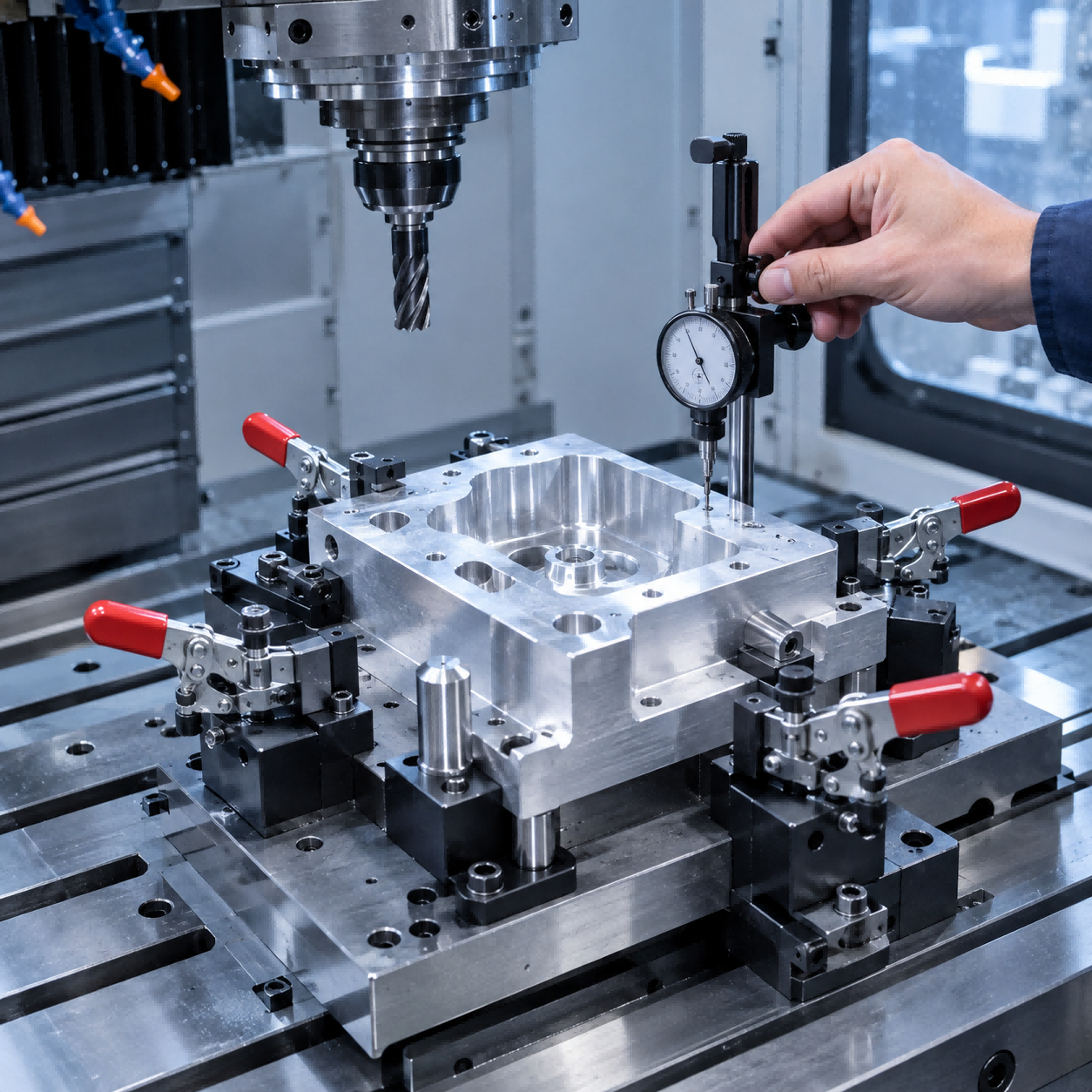
CNC Workholding & Fixture Design: The Key to Consistent CNC Parts
Related Article
