CNC Machining Process Overview: From Drawing to Finished Part
CNC Machining Process Overview: From Drawing to Finished Part
A simple, step-by-step guide to how custom CNC parts are made — from your first drawing to the finished part at your door.
Get a Free QuoteIf you're new to custom manufacturing, the CNC machining process can seem complex. You send a drawing or 3D model, and weeks later you receive a precise metal or plastic part. But what actually happens in between?
This guide breaks down the entire CNC machining workflow into simple, understandable steps. By the end, you'll know exactly what to expect when you order custom parts from Opicreate.
Engineering Drawing & DFM Analysis
Every project starts with your design. You provide a 2D drawing (PDF, DWG) or a 3D model (STEP, IGES, SolidWorks). Our engineers then perform a Design for Manufacturability (DFM) analysis.
This step checks:
- Are all features machinable with our equipment?
- Are tolerances realistic and achievable?
- Are there any undercuts or impossible geometries?
- Can material be sourced in the required size?
If we find potential issues, we'll suggest modifications before production begins. This prevents costly mistakes and delays later.
Material Selection
We work with a wide range of metals and plastics:
Metals
- Aluminum 6061, 7075
- Stainless Steel 304/316
- Brass, Copper
- Titanium
Plastics
- POM (Delrin)
- ABS
- PEEK
- Nylon, PTFE
Our engineers can help you choose the right material based on strength, weight, heat resistance, and cost. If you're unsure, just tell us the application, and we'll recommend options. Learn more about material selection.
CAM Programming & Toolpath Generation
Once the design and material are confirmed, our programmers use CAM software to convert your 3D model into machine code (G-code). This code tells the CNC machine exactly how to move the cutting tools.
Key decisions at this stage:
- Which tools to use (end mills, drills, taps)
- Cutting speeds and feeds
- Toolpath strategies for roughing and finishing
- How many setups are needed
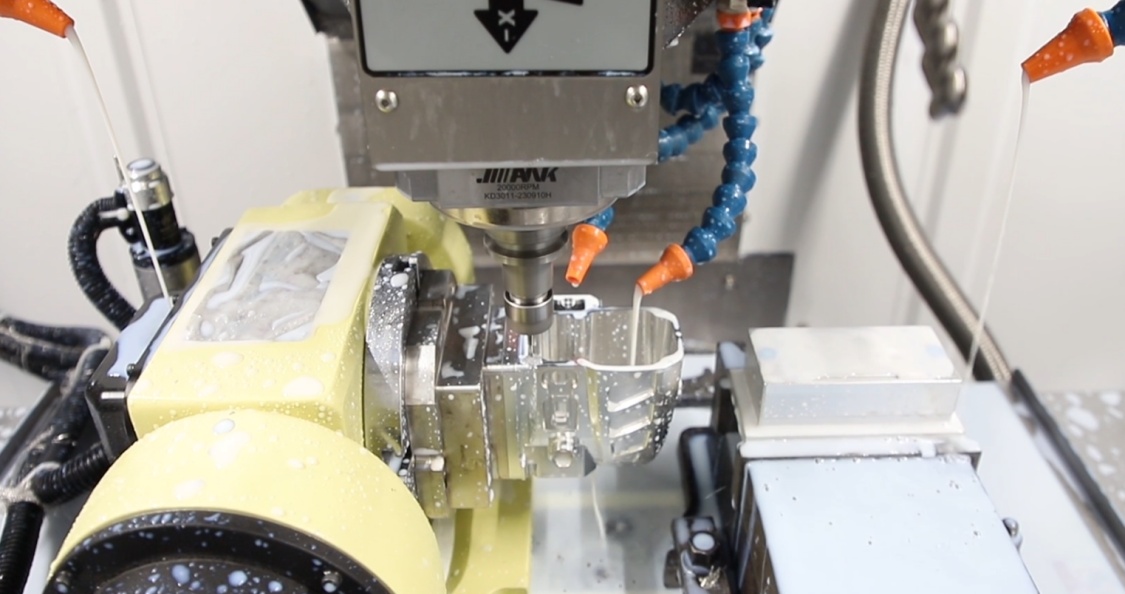
For complex parts, we may use 4-axis or 5-axis machining to reduce setups and improve accuracy.
Machine Setup & Workholding
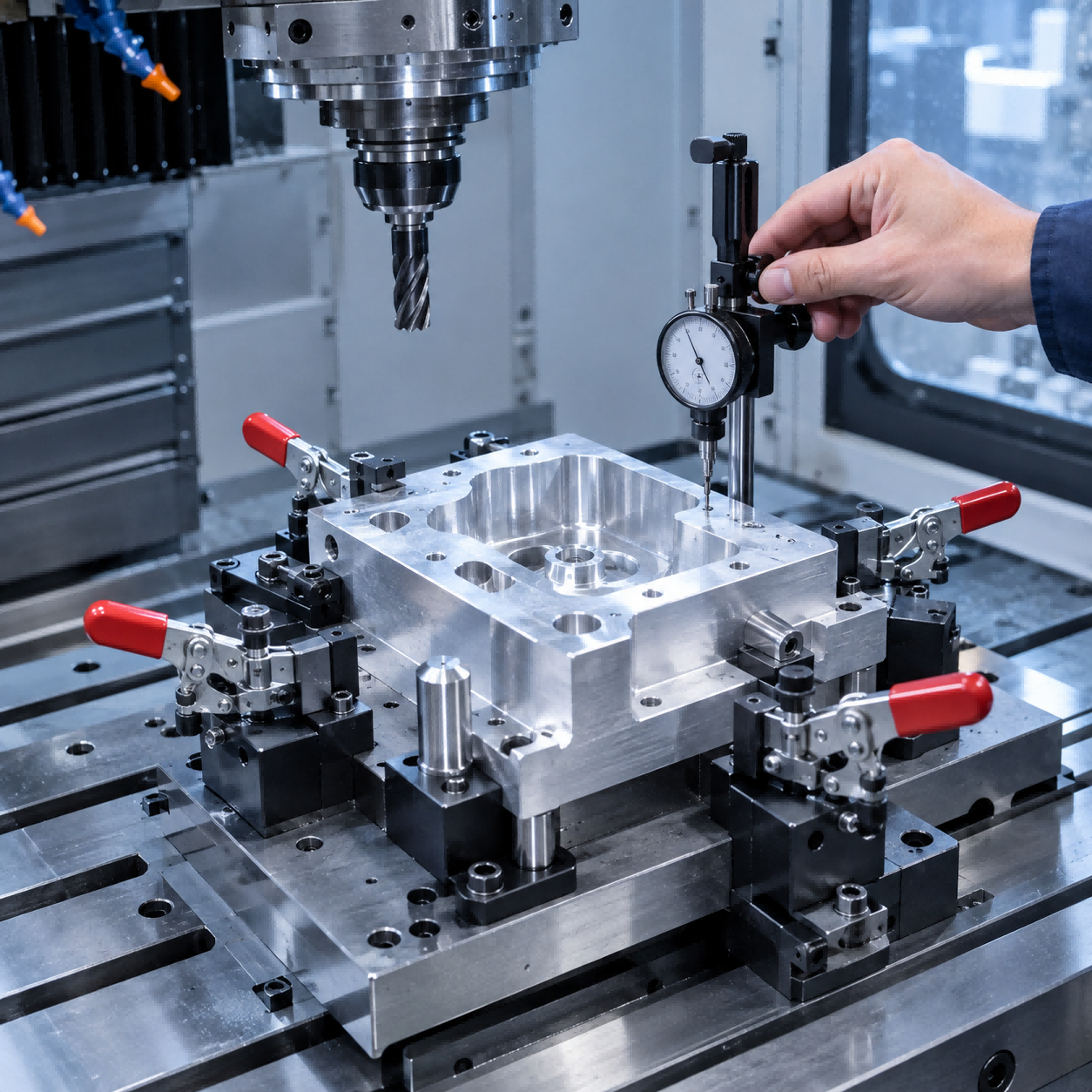
Before cutting begins, the raw material (called a "blank" or "stock") is securely fixed to the machine table using clamps, vises, or custom fixtures. Proper workholding is critical for maintaining precision and avoiding vibration.
For high-volume orders, we design custom fixtures to speed up loading and ensure consistent results across all parts.
Roughing – Removing Bulk Material
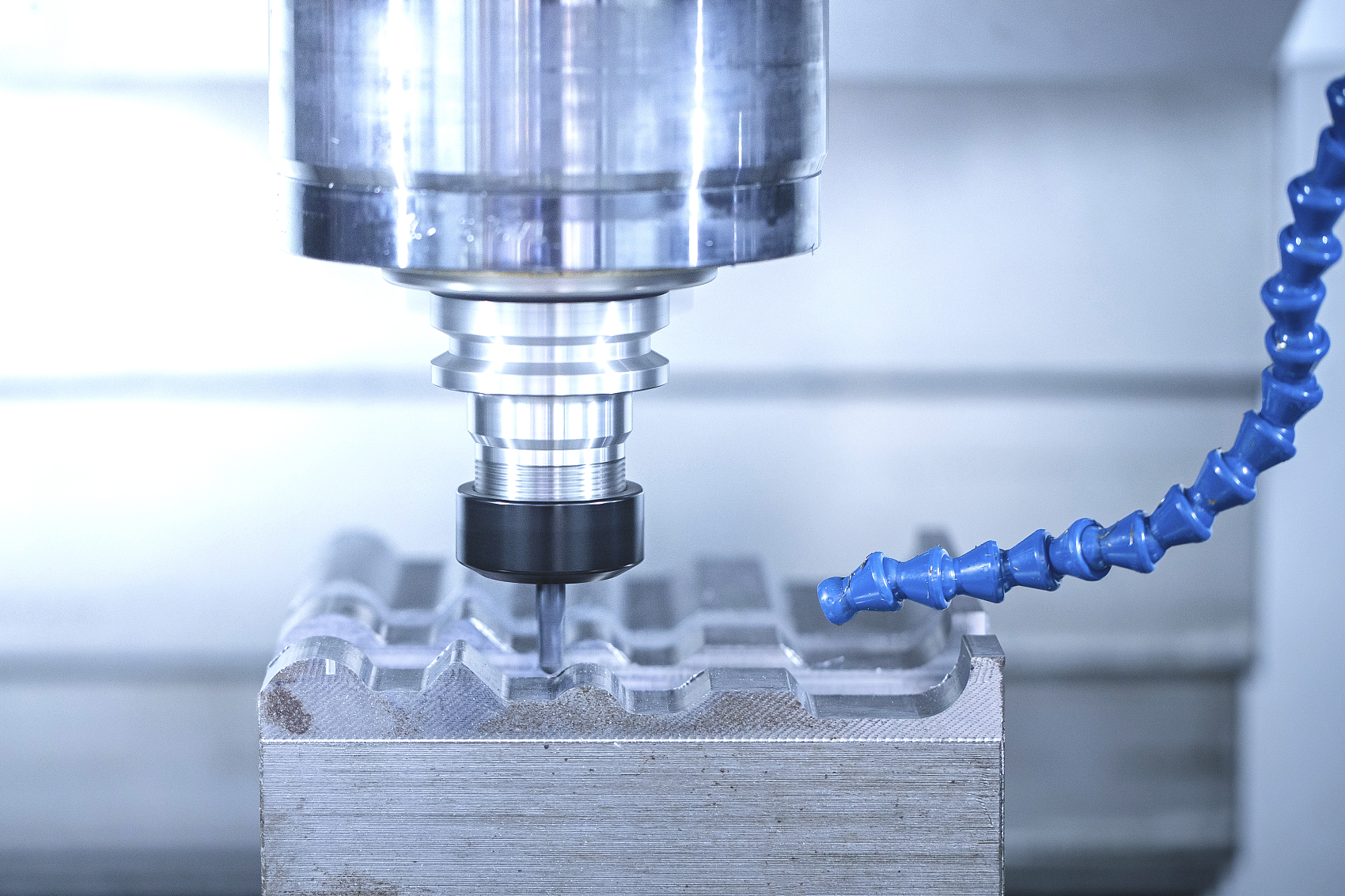
The first cutting pass is called roughing. The goal is to remove large amounts of material quickly, leaving a small allowance (usually 0.2–0.5 mm) for the final finish.
Roughing uses larger tools and aggressive cutting parameters. It's fast but leaves visible tool marks on the surface. That's normal and will be cleaned up in the next step.
Finishing – Achieving Final Dimensions and Surface Quality
The finishing pass uses smaller tools, slower speeds, and lighter cuts to achieve the exact dimensions and surface finish specified in your drawing. This is where the part reaches its final tolerance, often as tight as ±0.005 mm.
After finishing, the part may still have sharp edges or small burrs, which leads to the next step.
Deburring & Cleaning
Every machined part has tiny burrs—small ridges of material left along edges. We remove these by hand or using vibratory finishing machines. Then parts are cleaned to remove cutting fluids and chips.
If you require additional surface treatments (like anodizing, bead blasting, or passivation), they are applied after machining. These processes can improve corrosion resistance, appearance, or hardness.
Quality Inspection
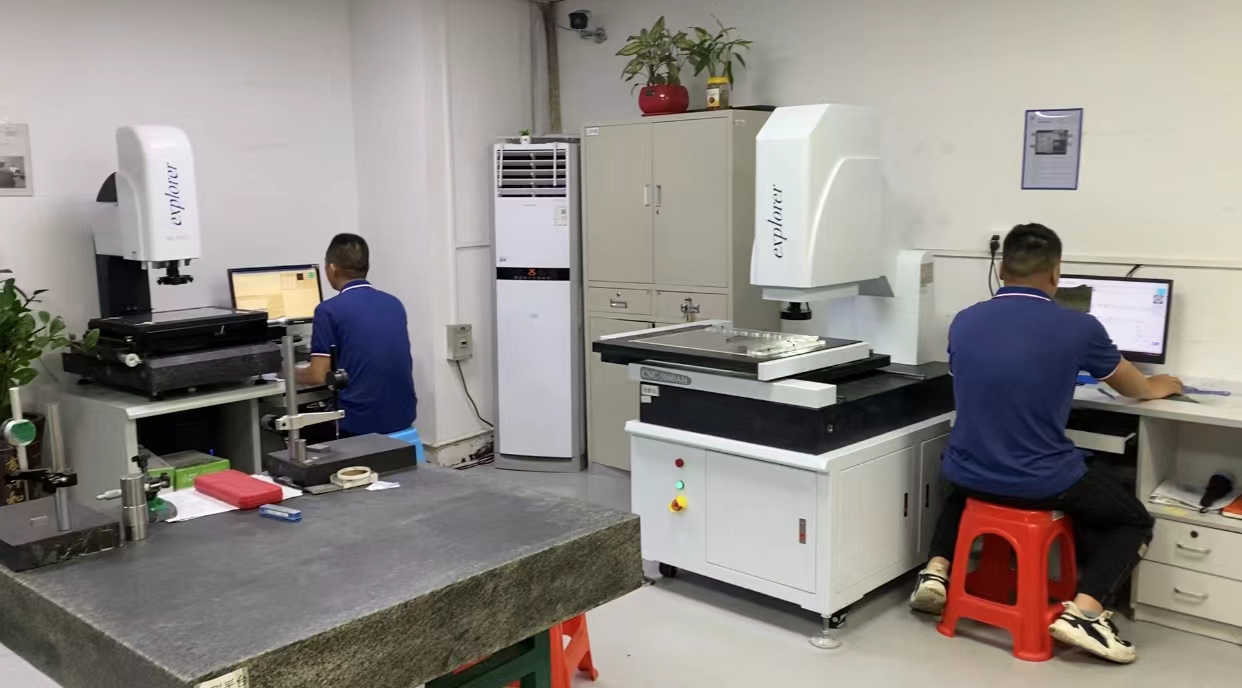
Before shipping, every part goes through inspection. We use precision measuring tools such as:
- Calipers and micrometers
- CMM (Coordinate Measuring Machine) for complex geometries
- Surface roughness testers
We can provide a dimensional inspection report upon request. For critical parts, material certificates (e.g., mill test reports) are also available.
Packaging & Shipping
Finished parts are carefully wrapped to prevent scratches and damage during transit. We use export-grade packaging for international shipping to the US and Europe. You'll receive tracking information as soon as your order ships.
Ready to Start Your CNC Machining Project?
Get a fast quote from our engineers. Fast lead times, competitive pricing, and one-on-one support.
Engineering Drawing & DFM Analysis: The First Step to Accurate CNC Parts
Related Article