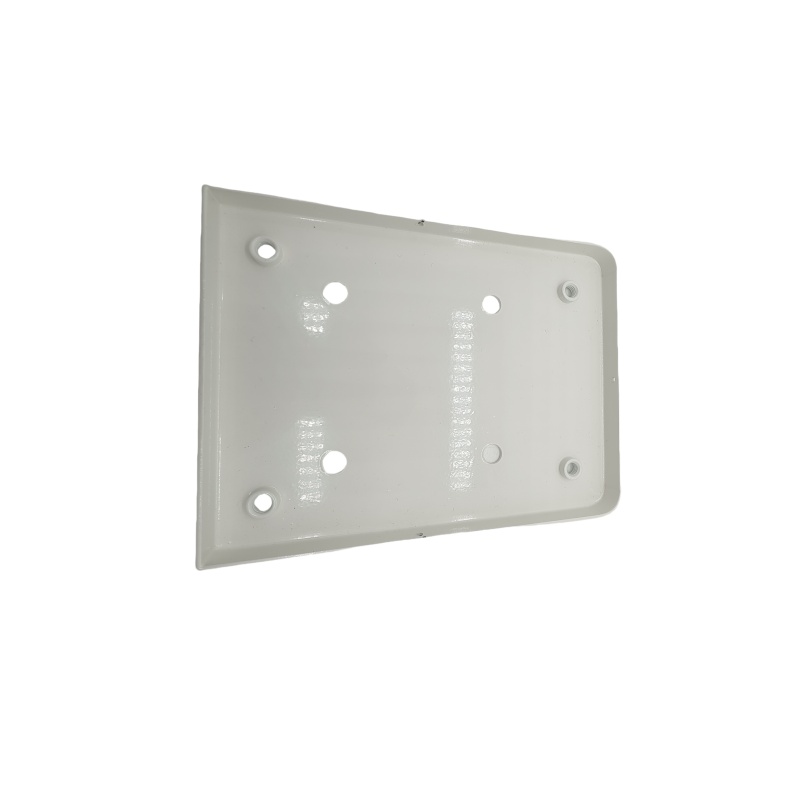
What Are the Advantages of 3D Printed Parts in Terms of Low Material Cost and High Usage Rate?
- 1. Low Material Cost Advantages
- 2. High Usage Rate in Additive Manufacturing
- 3. Design Flexibility and Smart Manufacturing
- 4. Why Manufacturers Prefer 3D Printed Parts
- 5. Final Conclusion
As industries worldwide adopt more efficient manufacturing methods, 3D printed parts have quickly become a transformative technology across aerospace, electronics, automotive, medical devices, and industrial engineering.
Companies such as Shenzhen Guangchuang Zhitong Technology Co., Ltd. provide advanced additive manufacturing and rapid prototyping services, supporting global clients through their platform: www.opicreate.com. This article explores why 3D printed parts excel in both low material cost and high usage rate, making them one of the most economical solutions in modern production.
1. Why 3D Printed Parts Significantly Reduce Material Costs
One of the most notable benefits of 3D printed parts is the potential to drastically reduce material expenses due to the additive nature of the process.
1.1 Additive Manufacturing Minimizes Waste
Traditional CNC machining cuts away large amounts of material, often resulting in 50–80% scrap. In contrast, 3D printing only uses the material required for the model, resulting in almost zero waste.
1.2 Affordable Material Options
Materials such as PLA, ABS, PETG, TPU, and nylon powders are cost-effective, widely available, and suitable for prototyping and batch production.
1.3 No Need for Expensive Tooling
Unlike injection molding, which requires molds costing thousands of dollars, 3D printed parts require no tooling, making them ideal for customized, low-volume, or prototype applications.
2. High Material Usage Rate: A Key Manufacturing Advantage
2.1 High Utilization Efficiency
Additive manufacturing technologies such as SLS and MJF allow unused powders to be reused, reaching material usage rates as high as 70–95%.
2.2 Reduction of Support Structures
Many 3D printing processes require minimal or no supporting materials, further boosting usage efficiency.
2.3 Efficient Processing of Engineering Materials
Engineering-grade nylon, carbon fiber composites, and high-performance resins are used efficiently, resulting in stronger and lighter 3D printed parts.
3. Enhanced Design Flexibility and Smart Manufacturing
3.1 Complex Structures Without Extra Cost
3D printing enables lattice structures, internal channels, organic shapes, and lightweight designs that save material while maintaining strength.
3.2 Faster Prototyping
Shenzhen Guangchuang Zhitong Technology Co., Ltd. specializes in rapid prototyping and on-demand production, helping customers shorten the development cycle dramatically.
3.3 Lower Inventory Through On-Demand Manufacturing
Since no molds are needed, companies can produce only what they need, reducing inventory costs and avoiding overproduction.
4. Why More Manufacturers Are Choosing 3D Printed Parts
- Cost-effective for both prototypes and low-volume production
- Fast turnaround and design flexibility
- Minimal waste and high sustainability
- Supports on-demand, customized manufacturing
5. Conclusion
In modern manufacturing, achieving lower material cost and higher usage efficiency is essential. 3D printed parts excel in both areas, offering unmatched flexibility, minimal waste, and fast production cycles.
Through advanced engineering and manufacturing services, Shenzhen Guangchuang Zhitong Technology Co., Ltd. continues to help global companies benefit from the power of additive manufacturing. For more information, visit www.opicreate.com.
Recommended Products
⭐ Rapid Prototyping Service
Fast delivery for functional prototypes and design validation.
View ServiceWhy “Understanding the Impact of Material Machinability” Matters for CNC Manufacturing
How CNC Enhances Smart Structural Part Manufacturing
Related Article