CNC Machining Parts – Intricate Parts and Accessories
author: Ava
2025-11-12
CNC Machining Parts – Intricate Parts and Accessories
Table of Contents
1. What Are Intricate Parts and Accessories
Intricate CNC machining parts refer to components with complex geometry, fine details, or miniature features that demand high precision. These may include micro-holes, thin walls, fine threads, and tight fits. Accessories often involve mounting brackets, inserts, or connectors used in high-end devices or machinery.
2. Design Guidelines
- Respect tool geometry – small features require small cutters.
- Minimum feature size: avoid holes smaller than 0.8 mm and walls thinner than 0.8 mm for metals.
- Add fillets to internal corners – avoid sharp transitions.
- Keep depth-to-width ratio ≤ 3:1 for pockets.
- Replace sharp edges with chamfers or small radii.
- Minimize part count – combine assemblies when possible.
3. Tooling and Machine Selection
- Micro endmills (0.5–3 mm) for fine details.
- High-speed machining (HSM) improves quality and speed for tiny features.
- 5-axis machining reduces setups for complex contours.
- Swiss-type lathes are ideal for long, slender accessories.
- EDM used for tight internal corners or tiny cavities.
4. Material Selection
- Aluminum (6061, 7075): lightweight, easy to machine.
- Stainless steel (304, 316): durable, corrosion resistant.
- Brass/Copper: excellent machinability and surface finish.
- Engineering plastics: ideal for lightweight or insulated parts.
5. Tolerances and Surface Finish
- Critical fits: ±0.01–0.03 mm.
- General features: ±0.05–0.1 mm.
- Surface finish: Ra 0.4–1.6 µm typical; specify anodizing or plating if needed.
- Account for post-process thickness and heat treatment distortion.
6. Fixturing and Inspection
- Use soft jaws or vacuum fixtures to avoid deformation.
- In-process probing ensures accuracy for micro-features.
- CMM verification for batch inspection of critical geometry.
7. Cost Drivers
- Extremely small features increase cycle time.
- Deep pockets and multiple setups add complexity.
- Tight tolerances and custom fixtures raise cost.
- EDM, plating, or polishing further increase lead time.
8. Practical Tips
- Use standard cutter diameters (0.5, 1.0, 2.0 mm).
- Prototype before full-scale production.
- Specify critical tolerances only where needed.
- Add datums for inspection and assembly alignment.
9. Quick Checklist
- [ ] Minimum hole ≥ 0.8 mm
- [ ] Wall ≥ 0.8 mm (metal) / 1.0 mm (plastic)
- [ ] Internal radii match cutter size
- [ ] Critical tolerances justified
- [ ] Post-process allowances included
- [ ] Datums defined for QC
Partner with professionals like Shenzhen Guangchuang Zhitong Technology Co., Ltd. for high-precision CNC machining services. Learn more at www.opicreate.com.
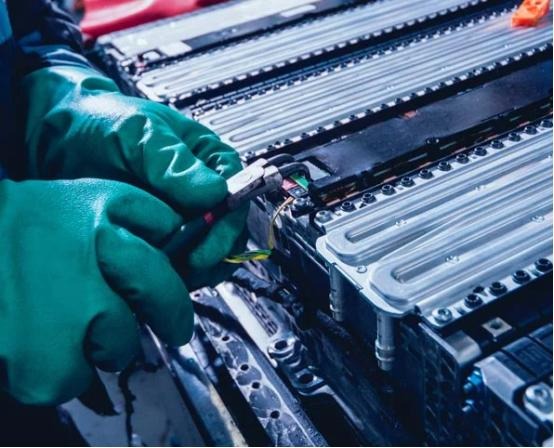
CNC machining Parts compatibility with new energy batteries
CNC Machining — How to Design Parts for CNC Machining
Related Article
CNC machining, battery pack housing, battery cover, EV enclosure manufacturer, precision machining for energy storage, import export data
CNC Machining for Battery Enclosures: Global Data & Future Trends
These precision parts feature complex internal flow channels that circulate coolant to absorb heat during fast charging and driving. Manufacturing such plates requires ultra-precision CNC machining, exceptionally tight surface flatness, and zero-defect leak tightness
Cooling Plates for EV Batteries: Why CNC Milling of Complex Flow Channels Demands Extreme Surface Flatness
Using adaptive clearing toolpaths and advanced CAM strategies, CNC centers remove material quickly while minimizing vibration. For high-volume production, a 4-axis or 5-axis machining center allows the machine to reach undercuts and complex fin arrays in a single clamping operation, drastically reducing cycle times and improving dimensional consistency across thousands of parts.
Precision CNC Machining for Solar Inverter Heat Sinks: The Backbone of Efficient Power Conversion